First dog screwworm case reported in the Valley
Elena Torres is a health and wellness journalist with a decade of experience, having previously worked for El Paso Times. She holds a degree in Public Health from the University of Texas at El Paso and focuses on community health issues that matter locally.
More from Elena →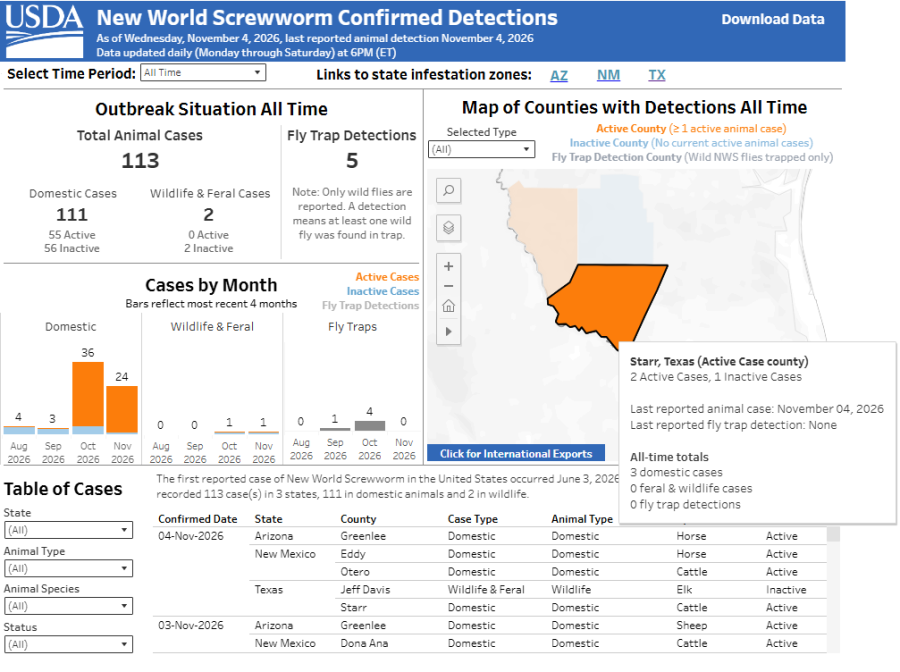
In this story
On a quiet morning in Brownsville, Maria Lopez noticed her beloved Labrador, Buddy, scratching incessantly and showing signs of discomfort. Concerned, she took him to the local veterinarian, little realizing that her pet’s condition would reveal a troubling health threat now making its way into the Rio Grande Valley. Just as families cherish their dogs as loyal companions and members of the family, this recent case of the New World Screwworm underscores the importance of community awareness and swift action to protect our pets and livestock from emerging health risks.
What Happened
In a startling development, the U.S. Department of Agriculture announced the detection of an active case of the New World Screwworm in a dog in Starr County, Texas. This marks the first time in recent history that a canine in deep South Texas has been infected, signaling a potential spread of this parasitic pest beyond its usual confines. The screwworm, known scientifically as Cochliomyia hominivorax, is notorious for inflicting severe tissue damage on animals and humans alike, often leading to debilitating infections if not promptly treated.
The case was identified through routine surveillance efforts aimed at monitoring livestock and wildlife health. The USDA confirmed that the infected dog had recently been in contact with local farm environments, raising concerns about the possible wider spread within the community. The detection underscores the importance of vigilance, especially for pet owners and farmers who may unknowingly come into contact with this invasive pest.
Understanding the Threat
The New World Screwworm is a parasite that lays its eggs in open wounds or sores on warm-blooded animals. The larvae hatch within 24 hours, feeding on living tissue and causing severe tissue destruction. Historically, the screwworm was a major problem in the southern United States, but aggressive eradication programs, including sterile insect techniques, have largely kept it at bay—until now.
Experts warn that if not contained, the presence of screwworms could threaten livestock health, impacting local agriculture and the economy. The USDA’s Animal and Plant Health Inspection Service (APHIS) has issued alerts urging farmers, veterinarians, and pet owners to remain vigilant for signs of infection, which include open wounds, foul odor, and excessive licking or scratching.
Community Reaction
The news has caused concern among residents of Brownsville and the surrounding communities. Local pet owners are especially worried about their animals, many of whom spend time outdoors where they could come into contact with infected insects or contaminated environments. Dr. Ana Martinez, a veterinarian at Brownsville Animal Clinic, emphasized the importance of preventive care.
"Regular check-ups, prompt wound care, and maintaining a clean environment are crucial right now," Dr. Martinez advised. "Pet owners should also be cautious about open wounds and seek immediate veterinary attention if they notice any unusual symptoms. It’s a community effort to prevent the spread of this parasite."
Community Efforts and Resources
Local authorities, in partnership with state agencies, are stepping up efforts to monitor and control the situation. The Cameron County Health Department has increased outreach to educate residents about the signs of screwworm infestation and the importance of early treatment. They are also coordinating with livestock owners to implement biosecurity measures.
For pet owners, resources such as free veterinary clinics and educational materials are available through organizations like the Texas Veterinary Medical Association. Additionally, the Texas Department of Agriculture provides guidelines for preventing and managing screwworm cases on their official website.
Historical Context and Past Eradication Efforts
The presence of the screwworm in the United States was once a major concern, especially in the southern states where livestock farming is a vital part of the economy. During the mid-20th century, outbreaks caused significant economic losses, prompting large-scale eradication efforts. The most notable was the sterile insect technique (SIT), developed by the USDA and international partners, which involved releasing sterilized male screwworms into the wild to reduce reproduction rates.
This program was remarkably successful. By the early 2000s, the pest was declared eradicated from the continental U.S., with only isolated cases reported in Florida and some Caribbean islands. However, the recent detection in Starr County signals that the threat has not been entirely eliminated and underscores the importance of ongoing surveillance and rapid response systems.
For the local agricultural community, this history is a reminder of both the progress made and the vigilance required to prevent re-establishment of the pest. Many farmers and ranchers remember the economic devastation caused by outbreaks decades ago and are now more attentive to biosecurity measures to safeguard their livelihoods.
What’s Next
While the detection of this case is concerning, it also serves as a wake-up call for the community to remain vigilant. Authorities are deploying targeted insect control measures, including trapping and sterilization programs, to prevent further spread. Public health officials stress that early detection and rapid response are key to safeguarding both animal and human health.
In the coming weeks, residents can expect increased outreach efforts, including community meetings and educational campaigns. Local veterinarians are urging pet owners to keep wounds clean, avoid outdoor exposure during peak insect activity, and report any suspicious symptoms immediately. This incident reminds us all that caring for our animals is a reflection of our shared commitment to family and community well-being.
Furthermore, local schools and community centers are being engaged to educate children and families about the importance of biosecurity and environmental stewardship. Many local organizations, including farm cooperatives and pet rescue groups, are collaborating to distribute informational materials and host workshops on disease prevention.
Potential Impact on Local Economy
The economic impact of screwworm outbreaks can be significant, especially for a region like the Rio Grande Valley, where agriculture and livestock are central to the local economy. Cattle ranching, dairy farming, and small-scale farms could face setbacks if the pest spreads unchecked, leading to increased costs for treatment and control measures.
Local business owners, particularly those involved in veterinary services, animal feed, and farm supplies, are closely monitoring the situation. Many are advocating for proactive measures to prevent an outbreak that could ripple through the community, affecting employment and local food supplies.
Community Resilience and Future Preparedness
This incident highlights the resilience of the Rio Grande Valley community, which has faced numerous challenges over the years—from hurricanes to economic downturns. The community’s response to this new threat will depend on continued cooperation among residents, local government, and federal agencies.
Officials are calling for sustained vigilance, ongoing surveillance, and investment in biosecurity infrastructure. The community’s collective effort, including responsible pet ownership, environmental management, and support for scientific research, will determine how effectively the Valley can prevent future incursions.
Looking ahead, the region’s health and agricultural agencies are planning to enhance monitoring systems, including more frequent inspections and community reporting initiatives. They are also exploring new technologies, such as DNA-based detection methods, to improve early identification of invasive pests.
As Brownsville and the broader Rio Grande Valley face this challenge, the message is clear: preparedness and community engagement are our best tools in safeguarding our health, economy, and way of life. With continued vigilance, education, and cooperation, the Valley can overcome this threat and emerge stronger.